



Please rotate your device.

Almost done...

Here you go...

Thank you for your attention. Now you can explore
our brochure.

In case you would like to download a complete brochure,
please fill in the form below.

We also sent a link to direct download at your email

(optional)
I agree my personal data to be processed for the purposes of my request on terms defined in Privacy
Submission of data is voluntary, yet indispensable to execute queries. Personal data can be accessed, corrected or withdrawn any time at request.
COMPLETE FORM TO CONTINUE
Posted: August 14, 2026,  in Products & Features

Fuel Is the Cost You Can't Control at the Pump - But Can Control in the Operation

Fuel Is the Cost You Can't Control at the Pump - But Can Control in the Operation
Every airline CFO watches the same two screens with the same unease: the geopolitical news and the jet fuel price chart. The two have never been more tightly coupled. Political instability, sanctions, and supply disruptions send fuel prices swinging in ways no hedging strategy fully absorbs - and conflict-driven airspace closures force reroutes that add hours and tonnes to sectors that used to be routine. For a major carrier, fuel is one of the largest single cost items on the books: an airline generating $18 billion in revenue can easily spend close to $4 billion of it on fuel alone. When the per-tonne price jumps 20%, no commercial initiative on earth recovers that money as fast as it disappears.

Here is the uncomfortable truth and the genuine opportunity in one sentence: an airline cannot control the price of fuel, but it has far more control over the quantity it burns than most operations currently exercise. Across Smart4Aviation's suite, fuel efficiency isn't a module - it's a property of how the whole operation runs. Let's follow the kilograms.
Fuel Is the Cost You Can't Control at the Pump - But Can Control in the Operation

Smart LOAD (Weight & Balance and Load Planning): Finding savings in the balance

Start where every flight starts: the loading. Weight and balance sits so deep in the routine that most airlines have stopped asking how much fuel it quietly costs them - yet it touches fuel burn through more levers than any other single ground process. Here is the full inventory of where Smart LOAD finds the kilograms:
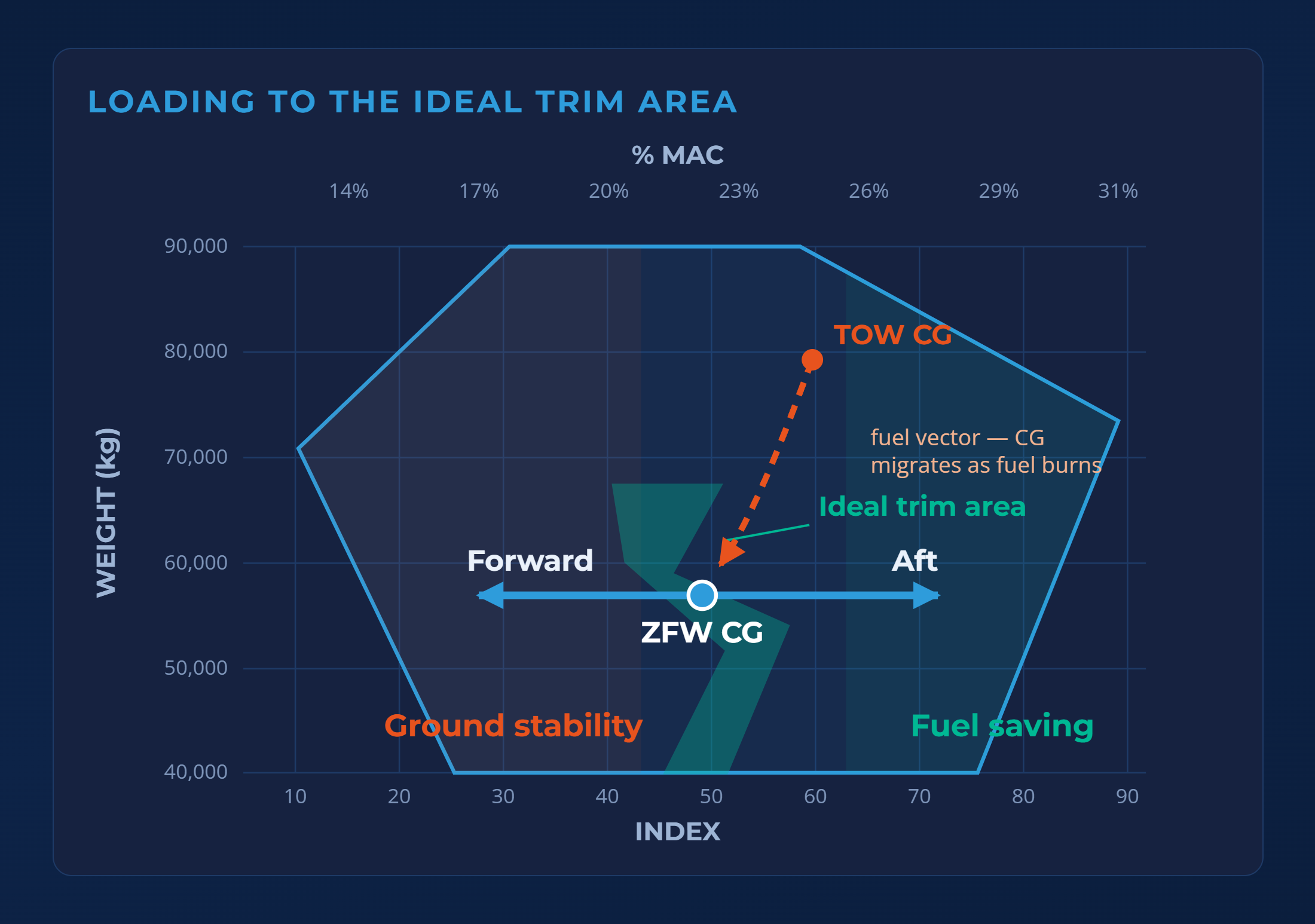
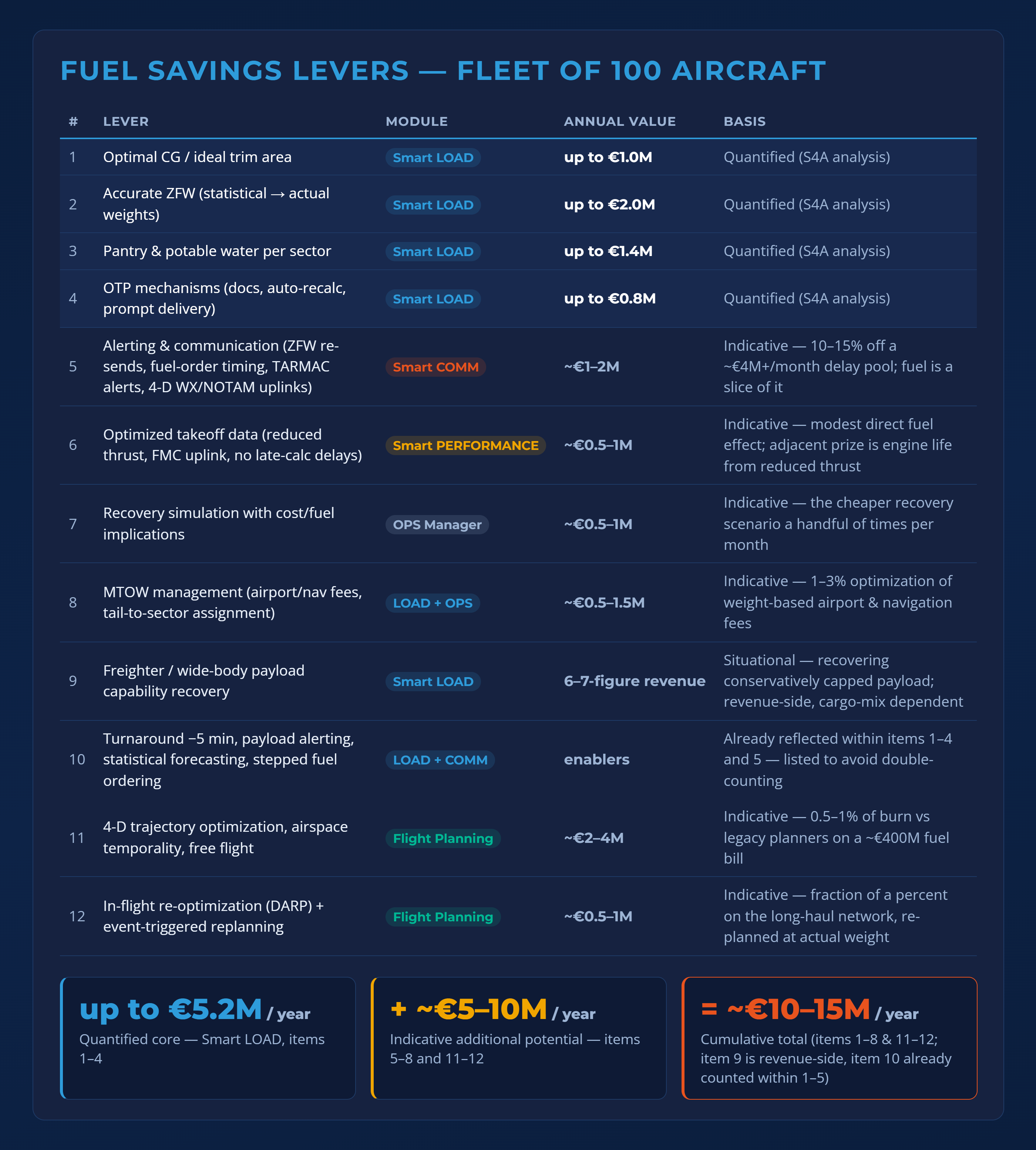
  • Optimal centre of gravity, every flight. A forward CG forces the horizontal stabiliser to generate a larger pitch-up moment, reducing net lift and increasing trim drag - an aft CG is materially more efficient. Smart LOAD aligns load distribution to your defined ideal trim area automatically on every departure, displays a fuel vector showing how the CG migrates as fuel burns off, and guards ground stability and tail-tipping limits while doing it - up to €1 million per year for an airline of roughly 100 aircraft, from physics alone.
Fuel Is the Cost You Can't Control at the Pump - But Can Control in the Operation
  • Zero fuel weight that is true instead of conservative. An overestimated ZFW means fuel loaded that was never needed — and historical forecasting error compounds into fuel policy, teaching the airline to carry insurance fuel indefinitely against its own uncertainty. Smart LOAD moves each weight component from assumption to fact, at whatever pace your data allows: passengers from adult standard, to male/female, to statistical, to non-standard weights; baggage from standard CAA-approved values, to statistical per IATA AHM 531, to actual weights - with gate bag weight derived from passenger weight; ULD tare from standard IATA values, to averages across your type inventory, to actual weight per serial number. Aligning planned ZFW with actual ZFW is worth up to €2 million per year at 100 aircraft.
  • Pantry and potable water as a per-sector decision. Most systems carry full standard galley values and full water tanks regardless of sector length, because they cannot handle anything more precise. Smart LOAD supports pantry from a single code, to multiple codes, to actual pantry weights - and potable water at an accurate percentage from 0–100%, including block-time variables. Treating this carriage as a decision rather than a constant is worth up to €1.4 million per year more.
  • Stepped, precise fuel ordering. Initial order at 80–90% issued well before departure, an optional standby step supporting tankering decisions, and a precise final top-up - with the fuel slip generated automatically and delivered to the handler or directly to the fuel supplier. No defensive rounding, no phone-tag with the fuel truck.
  • Statistical intelligence on every forecast. Historical cargo and mail weights, baggage ratios, no-show factors, and ramp/trip/taxi fuel data - grouped by airline, flight number, city pair, aircraft type, and day of week - feed forward into every future flight's planning, so estimates converge on reality instead of drifting from it.
  • Accurate EZFW upstream to flight planning. The estimated zero fuel weight is calculated and transmitted automatically - and re-sent immediately when it moves past threshold - so the operational flight plan and its fuel calculation are always built on current weight, not the morning's guess.
  • Payload carried instead of stranded. Early overweight and low-underload alerting, realistic bulk volume estimation, priority-driven offloading of low-value items, and timely loading of standby shipments mean the aircraft departs full and on time - instead of leaving payload behind in a last-minute scramble that generates delay, and delay generates burn.
  • Freighter and wide-body capability recovery. Where legacy systems cannot model what the manufacturer actually permits, W&B engineers impose conservative caps that fly for years. Smart LOAD models flexible CG envelopes based on actual aircraft and fuel weights and engine thrust, normal and increased cumulative load limits, standard and non-standard fuel distributions, cargo and fuel lateral imbalance, and ballast and unusable fuel - recovering capped payload and letting every kilogram of fuel carry revenue.
  • On-time performance mechanisms. Digital document transmission instead of printing and walking, automatic recalculation on last-minute changes, prompt W&B delivery to EFB/ACARS for take-off performance, and immediate ZFW re-sends that prevent late re-fuelling - worth up to €800,000 per year at 100 aircraft in avoided delay cost, a meaningful slice of it in kerosene: APU running, taxi queues, holding, and downstream recovery flying.
  • Improved turnaround times through a combination of pre-emptive management of loading exceptions in conjunction with our mobile load application keeping resources within the footprint of the aircraft.
  • Maximum weight management. Airport and navigation fees are assessed on maximum take-off weight, making MTOW a genuine commercial decision. Accurate weight forecasting and exact aircraft weight calculation let you assign aircraft to flights with estimated ZFW and MTOW in view - and operate reduced maximum weights with confidence instead of payload-restriction anxiety.

These figures assume a 100-aircraft fleet and scale proportionally with size. Individually, each lever looks modest; together, on every sector, every day, they are the most dependable fuel savings in the operation - available without a single new aircraft or route.
Fuel Is the Cost You Can't Control at the Pump - But Can Control in the Operation

Smart COMM (Communication & Alerting): information arriving on time is fuel not burned

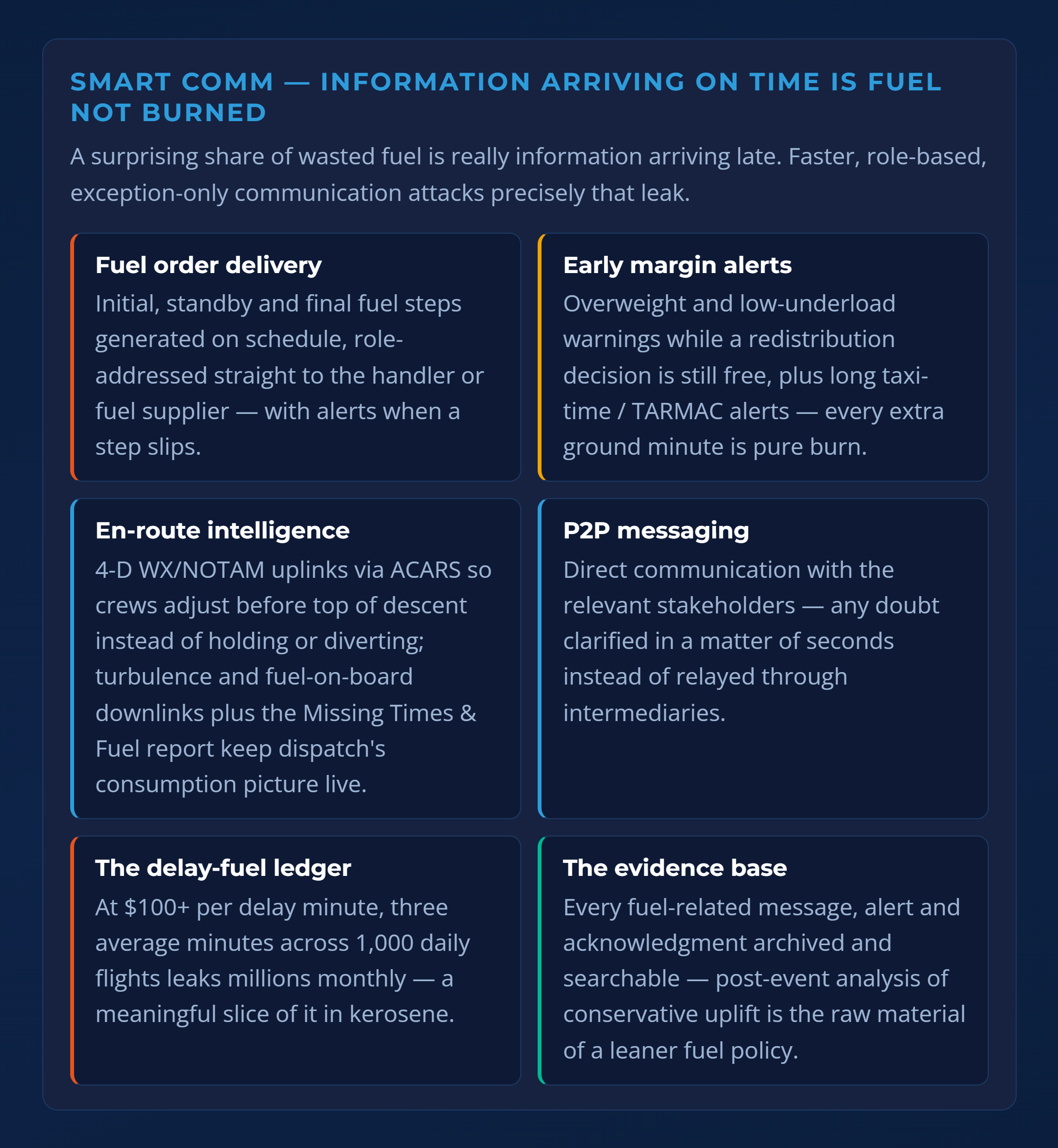
The connective tissue matters more than it appears, because a surprising share of wasted fuel is really information arriving late. Smart COMM's job is precisely that: delivering the proper alerts, on time, to the relevant individuals. Take the zero fuel weight chain - the weight accuracy itself is Smart LOAD's work, but its value depends on the right people learning about changes instantly. When Smart LOAD re-issues a ZFW that has moved past threshold, Smart COMM ensures the alert reaches exactly the roles that must act - the dispatcher whose flight plan needs recalculating, the fueling agent whose order changes, the crew whose figures are affected - the moment it happens, not on the next scheduled transmission or phone call. The same delivery discipline applies to the fuel order itself: initial, standby, and final fuel steps travel as role-addressed messages directly to the handler or fuel supplier, with alerts raised if a step hasn't completed on time - closing the gap between "fuel decision made" and "fuel truck informed" that quietly generates both delays and defensive uplift.
Fuel Is the Cost You Can't Control at the Pump - But Can Control in the Operation
The alerting engine then works the margins across the whole flight. Overweight conditions, low underload, and approaching limitations surface as early warnings to exactly the roles that can act - a re-distribution decision made forty minutes out costs nothing; the same decision made under the aircraft costs payload, delay, and fuel. Long taxi-time alerts flag flights exceeding TARMAC thresholds, where every extra minute of ground running is pure burn. Weather and NOTAM changes reach dispatchers on 4-D route logic and are uplinked to the cockpit automatically via ACARS, so crews adjust early to a deteriorating destination instead of discovering it at top of descent — the difference between an efficient re-plan and holding fuel or a diversion. Turbulence reports, fuel-on-board downlinks, and the Missing Times and Fuel report keep dispatch's picture of actual consumption current across the fleet. And the arithmetic of delay itself belongs in the fuel ledger: with a single delay minute costing upwards of $100 - APU running, taxi queues, missed slots, holding, and the recovery flying that ripples downstream - an airline averaging just three minutes of delay across 1,000 daily flights is leaking millions monthly, a meaningful slice of it in kerosene. Faster, role-based, exception-only communication attacks precisely that leak. Finally, because every fuel-related message, alert, and acknowledgment is archived and searchable, fuel management gains what it usually lacks: an evidence base. Post-event analysis of where uplift decisions went conservative is the raw material of a leaner fuel policy.

Smart PERFORMANCE (Aircraft Performance): the right numbers at the right moment, every takeoff

Takeoff is where weight, weather, runway, and thrust meet - and where accurate, timely computation converts directly into efficiency. Our Smart PERFORMANCE - aircraft performance solution interfaces with the aircraft manufacturers' own computational engines, so every calculation reflects what the airframe actually permits rather than a conservative approximation. Fed with the actual take-off weight and centre of gravity from Smart LOAD - with automatic cross-checks between the two modules - it produces optimized take-off data for the specific tail, runway, intersection, and conditions of the day: the appropriate flap and thrust settings rather than worst-case defaults. Optimized reduced-thrust takeoffs are one of the industry's most established efficiency and engine-life levers, and they are only as good as the weight data feeding them - which is exactly why the LOAD-to-PERFORMANCE data flow matters. MEL and CDL restrictions are applied automatically, so performance is never recalculated by hand from a paper deferral list. Just as importantly, the result arrives on time: computed data is delivered promptly to the EFB or uplinked directly to the aircraft FMC via ACARS - eliminating the late-performance-calculation delay pattern and the manual transcription step it invites. Accurate weights in, manufacturer-exact computation, automatic restriction handling, instant delivery: each takeoff flown on its true optimum instead of a padded estimate, sector after sector.

Flight planning: every track mile has a price tag

If loading decides how efficiently the aircraft flies, flight planning decides how far it must fly - and this is where today's political geography bites hardest. Legacy route optimizers, many conceived decades ago, discard candidate routes early and struggle with dynamically constrained airspace. The next-generation flight planning solution used by Qantas takes the opposite approach: it assesses all possible paths, models performance for the specific tail, and applies fuel and navigation constraints up front. Its 4-D trajectory optimization interacts with airspace temporality - speeding up or slowing down a 14-hour flight to transit special-use airspace when it's inactive rather than flying around it, saving track miles and fuel that a 3-D planner simply cannot see. Free-flight capability rides favorable winds across oceanic expanses; automated event triggers regenerate the plan whenever ZFW, departure time, weather, or fuel requirements change, so the aircraft always departs on the freshest optimum rather than a stale one. And with automated in-flight re-optimization (DARP), long-haul flights are re-planned at top of climb on actual weight and time - recovering efficiency that evaporates between briefing and takeoff. In a world where closed airspace reshuffles routes weekly, an optimizer that finds the best compliant trajectory every time is a fuel policy in itself.

Across the suite, the same logic

The pattern repeats in every domain. Fleet and schedule management assigning aircraft to flights with weights and capabilities in view, so the right tail flies the right sector. Recovery simulation that shows the fuel and cost implications of each disruption scenario before you commit to one. Flight tracking with turbulence and deviation awareness supporting efficient flight watch. Briefing packages whose accuracy keeps crews planning on current reality. Each module contributes its kilograms; the connected platform makes them compound.
Fuel Is the Cost You Can't Control at the Pump - But Can Control in the Operation

A pragmatic closing: the features are there - the discipline is yours

Let's be straightforward, because credibility matters more than a marketing. These savings are not delivered by only installing software; they are delivered by integration, data quality, and operational discipline. An airline that connects the systems properly to flight planning, check-in, cargo, and fuel sources - that moves honestly from standard to statistical to actual weights, that defines its ideal trim area explicitly with its W&B engineers - realizes the numbers above. An airline that treats the tools as screen replacements gets better screens and a fraction of the benefit. The capability is in the product; the realization is in the implementation.

But here is why the conversation is worth having now: with fuel prices where geopolitics has pushed them, the business case has never been larger. The figures above scale with fleet size - and for many operations, the combined savings across CG optimization, ZFW accuracy, carriage optimization, and delay reduction mean that implementing a new Smart4Aviation system can pay back its investment within the first few months of use. Fuel prices are set by the world. Fuel consumption is set by your operation. Let's talk about which one you'd rather depend on.

A note on scope: fuel is only one chapter

Finally, to be clear about what this article deliberately did - and did not - cover: we focused exclusively on features and mechanisms related to fuel savings, because the current price environment makes that business case the most urgent. But fuel is only one chapter of the full story. The same platform delivers a range of equally important benefits that were not the purpose of this article and that further reduce operational costs: end-to-end automation of routine processes, exception-based operations that let one professional safely supervise what once occupied a team, the corresponding FTE efficiency and productivity gains, reduced training and support costs from a single consistent platform, infrastructure and licensing consolidation, fewer errors and their downstream costs, improved on-time performance beyond its fuel component, and stronger compliance through comprehensive audit trails. Each of these deserves — and has — its own analysis. Taken together with the fuel savings described here, they are the reason the total business case for a consolidated Smart4Aviation implementation is consistently stronger than any single dimension suggests. If you'd like the complete picture for your operation's size and profile, that's exactly the conversation we'd welcome.
Posted: March 13, 2026,  in News

Smart4Aviation to Deliver Weight & Balance and Load Planning Solution for easyJet

Smart4Aviation to Deliver Weight & Balance and Load Planning Solution for easyJet
Smart4Aviation, a global provider of innovative airline IT solutions, has signed an agreement on 15th of December 2025 with long-standing customer easyJet to deliver Smart LOAD, its fully exception-based weight & balance and load planning solution. The implementation marks a key milestone in easyJet’s journey towards centralized, highly automated load control operations.

easyJet and Smart4Aviation share a well-established partnership, with the airline already leveraging Smart4Aviation’s mobile solutions for Pilots and Cabin Crew, supported by the advanced communication and alerting module Smart COMM. Building on this proven ecosystem, easyJet’s decision to adopt Smart LOAD was a natural progression aligned with its operational efficiency strategy.

By centralizing load planning on Smart4Aviation’s integrated platform, easyJet aims to unlock tangible operational benefits, including enhanced automation, fuel savings, improved on-time performance, and significantly reduced aircraft turnaround times. A key driver is the minimization of manual effort required from flight crews during Load and Fuel Confirmation processes, enabling greater focus on core operational priorities.

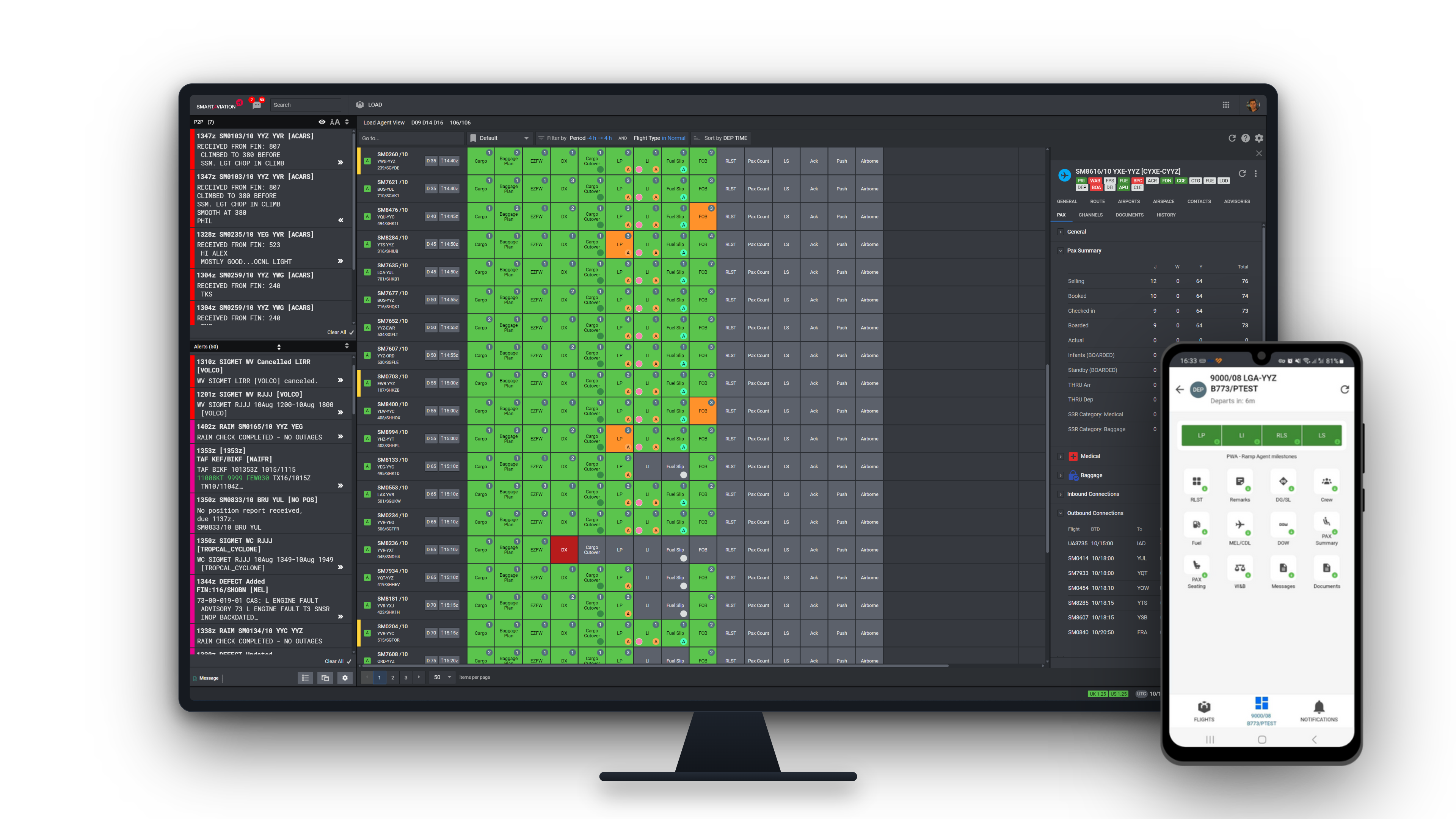
Smart LOAD is a state-of-the-art, exception-based weight & balance solution designed to automate and optimize load planning, engaging operational staff only when deviations or irregularities occur. The system supports both centralized and decentralized load control models and is suitable for airlines as well as ground handling organizations. Highly configurable, Smart LOAD adapts to diverse operational workflows and stakeholder requirements, covering not only core load planning but also adjacent processes such as flight planning, baggage and cargo planning, fuel loading, passenger reconciliation, and the captain’s final approval. The solution fully complies with international air traffic regulations and airline-specific business rules, including cargo compatibility, Dangerous Goods handling, and MEL item processing.

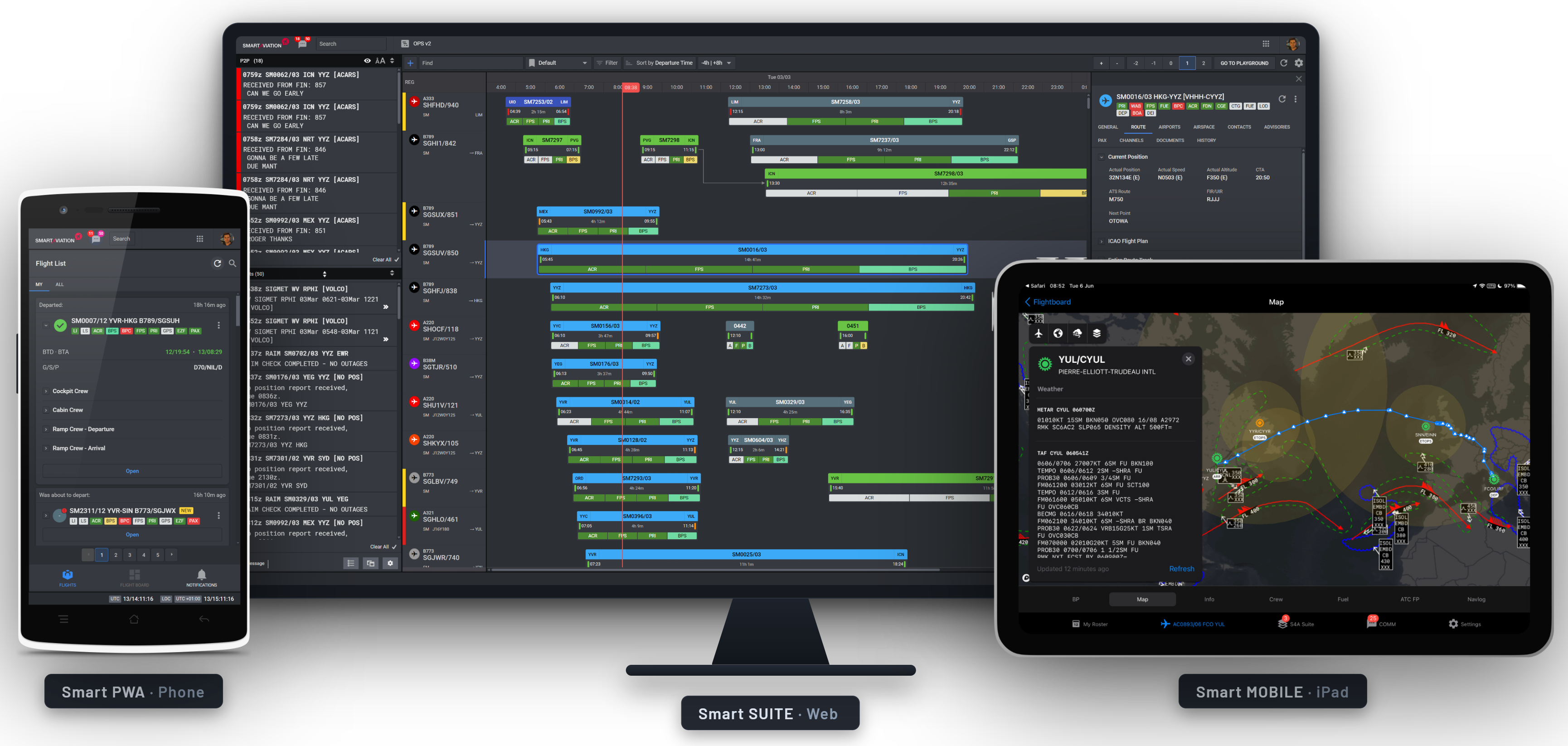
Smart LOAD also includes a dedicated mobile extension available on EFB, already in use by easyJet pilots, eliminating the need to introduce additional cockpit applications. In addition, Smart4Aviation provides a web-based mobile application built on Progressive Web Application (PWA) technology, enabling access across a wide range of mobile devices and platforms. This mobile capability is designed to streamline workflows for ramp agents and other turnaround stakeholders who do not have access to desktop systems or EFBs.

The solution will be deployed in the AWS infrastructure as an extension of the existing installation.

We are looking forward to working closely with easyJet in the coming months to deliver the expected operational benefits and to support their transition to centralized load control. We truly appreciate the trust placed in Smart4Aviation”, said Maciej Migacz, Director of Sales & Marketing at Smart4Aviation.
Smart LOAD has already demonstrated its efficiency and measurable value across multiple airlines worldwide, and we are confident it will significantly enhance easyJet’s loading operations”, added Volodymyr Pysaruk, Product Owner of Smart LOAD. “We are delighted that our fully integrated platform is able to connect all operational touchpoints at easyJet. Seamless integration across modules will ensure smooth weight & balance and load planning operations, fully aligned with the applications already used on easyJet flight decks across Europe”, concluded Shaun Landy, Product Owner of Smart4Aviation’s Mobile Applications and Key Account Manager.

About easyJet
easyJet is a low-cost, European, point-to-point airline that operates more than 1200 routes across more than 37 countries and over 160 airports with its fleet of over 350 Airbus aircraft. They use their cost advantage, operational efficiency and leading positions in primary airports to deliver low fares for our customers – making great value travel accessible for everyone.

Posted: February 2, 2026,  in News

Smart4Aviation Extend Partnership with Smartwings

Smart4Aviation Extend Partnership with Smartwings
Smart4Aviation is pleased to announce the extension of its partnership with Smartwings, the leading airline in the Czech Republic, through the signing of a new contract covering the implementation of additional modules from the Smart4Aviation portfolio.

Building on the implementation of the state-of-the-art Electronic Flight Folder (EFF) for pilots, Smartwings will now expand its digital ecosystem with four advanced operational solutions:
  • Smart COMM – an integrated platform for secure messaging, operational alerts, and flight monitoring, designed to streamline decision-making and enhance situational awareness across all operational teams. The solution includes a mobile iPad extension, enabling seamless collaboration with flight and cabin crews.
  • Smart BRIEF CABIN – a dedicated solution for cabin crew, fully integrated with the pilots’ platform, delivering digital briefing packages, seat maps, documentation, and operational forms in one unified environment shared with pilots.
  • Smart VIEW+ – real-time flight tracking with interactive maps, ADS-B data, and GADSS-compliant monitoring, providing full operational visibility and supporting the highest safety standards.
  • Smart OPERATIONS MANAGER – a dynamic, real-time schedule and fleet management solution that enables efficient aircraft utilization, proactive disruption handling, and end-to-end operational control.

All modules will be delivered within a single, unified platform, ensuring seamless integration, consistent data management, and a true “single source of truth” for all operational departments. This approach will strengthen data integrity and security while significantly increasing operational efficiency and reducing overall costs.

The entire platform is hosted on Amazon Web Services (AWS) and managed by Smart4Aviation. The existing infrastructure will be extended to accommodate the additional modules, ensuring scalability and enterprise-grade performance from day one.

The new implementation will further tighten system integration across Smartwings’ operational landscape. Smart COMM, integrated with Smart OPERATIONS MANAGER and Smart VIEW+, will streamline operational control and decision-making, enhance cross-team collaboration, and reduce the number of tools required to deliver time-critical information to the right stakeholders.

From a delivery perspective, the first phase will focus on Smart COMM and Smart BRIEF CABIN, followed by Smart VIEW+, and finally Smart OPERATIONS MANAGER. The project will leverage the existing integrations and core modules already deployed as part of the EFF system implementation, enabling a fast and low-risk rollout. The final phase will include joint enhancements to align Smart OPERATIONS MANAGER with Smartwings’ specific operational processes.

We truly value our partnership with Smartwings and are grateful for the trust they have placed in us. Just a few months after launching the EFF project, Smartwings decided to expand with four additional Smart4Aviation systems, which clearly demonstrates the strength of our cooperation”, said Maciej Migacz, Director of Sales & Marketing at Smart4Aviation. “Our priority now is to ensure a smooth and impactful introduction of these new modules. to ensure the platform covers even the most complex edge cases.

Working with Smartwings over the past months on the EFF project has been a real pleasure”, added Arkadiusz Janik, Director of Aviation Business Solutions at Smart4Aviation“.We look forward to expanding this collaboration across additional departments and delivering tangible value through the new modules. We are also excited to further evolve our next-generation Smart OPERATIONS MANAGER together with Smartwings, using real-world operational scenarios”.

We are excited to continue our journey with Smart4Aviation and further enhance our technology landscape at Smartwings”, said Lukas Beneš, Director of Ground Operations at Smartwings. “Our cooperation to date has proven that Smart4Aviation is a strong, long-term partner. Expanding their platform across more operational departments allows us to connect almost all business units through a unified, future-proof digital environment”.

The past months have confirmed that Smart4Aviation is the right partner for us”, added Petr Nováček, Flight Dispatch Manager at Smartwings. “By extending the platform, we are equipping our teams with integrated tools that support real-time operations, improve coordination, and prepare Smartwings for the next phase of digital transformation.”

This extension marks another milestone in Smartwings’ digital strategy, reinforcing its commitment to operational excellence, safety, and efficiency through modern, fully integrated aviation technology.

Smartwings, the largest Czech airline and a member of the Smartwings Group, has been present on the market for 28 years. Smartwings operates scheduled, charter and business-jet category private flights, as well as leases airplanes (ACMI wet/dry leases). Besides scheduled and charter flights, Smartwings also provides a wide range of special flights for renowned international companies, major humanitarian, and sports organizations worldwide. Smartwings is a member of the International Air Transport Association (IATA) and repeatedly receives the IOSA (IATA Operational Safety Audit) certificate representing the most advanced standards of operational safety and quality in air transport. Smartwings planes landed at 318 airports around the world last year.

Posted: November 12, 2025,  in News

Smart4Aviation will provide Cabin Crew Solutions for Philippine Airlines

Smart4Aviation will provide Cabin Crew Solutions for Philippine Airlines
Smart4Aviation, a global provider of innovative airline IT solutions, today announced the signing of a strategic agreement with Philippine Airlines (PAL), the flag carrier of the Philippines, to deploy advanced mobile and web-based applications that enhance cabin crew operations and streamline administrative processes. The contract, signed on September 25, 2025, also covers PAL's sister company PAL express.

Under the agreement, Smart4Aviation's Smart MOBILE iOS iPad platform will be implemented across PAL's cabin crew teams. The solution integrates multiple operational modules into one seamless, user-friendly application, enabling crew members to access essential flight and passenger information, digital documents, and reporting tools on the go.
Key modules include:
- Smart CORE / SIS / PORTAL — central administrative platform with user management, aircraft database, and secure access portal.
- Smart BRIEF CABIN — briefing package, flight summaries, crew & passenger data, destination contacts, and required declarations/forms.
- Smart CREW INFO — activity overview and personal notes for crew members.
- Smart DOC — centralized digital document repository.
- Smart eFORMS — customizable electronic forms to manage reporting and workflow processes.
The platform will integrate with PAL's existing IT systems and be hosted securely on Amazon Web Services (AWS) infrastructure managed by Smart4Aviation.

We are delighted to welcome Philippine Airlines and its sister company PAL Express on board", said Maciej Migacz, Director of Sales & Marketing at Smart4Aviation. "Our teams have already built a strong partnership during the selection process, and we are committed to delivering a solution that will empower PAL's cabin crew and operations teams for years to come."

The addition of PAL proves that our mobile solutions continue to evolve in ways that bring tangible value to airlines worldwide", added Shaun Landy, Product Owner — Mobile Solutions at Smart4Aviation. "We have made large investments in our mobile platform, and it's exciting to see leading world carriers recognizing its potential."

Robert Harold Woods, Vice President for Technical Operations at Philippine Airlines, said, “Our partnership with Smart4Aviation simplifies, modernizes, and increases efficiency across our cabin crew and operations workflows while enhancing safety, regulatory compliance, and passenger experience. This collaboration supports the flag carrier’s ongoing digital transformation strategy that will benefit our customers who expect reliable service as the nation’s flag carrier and largest international airline.

This marks Smart4Aviation's third major mobile solutions contract in recent months (Smartwings and MEA), further expanding its global footprint with airlines adopting its next-generation platforms for both pilots and cabin crew.

Posted: October 6, 2025,  in News

Smart4Aviation User Conference 2025

Smart4Aviation User Conference 2025
At the beginning of October, we had the pleasure of hosting our annual User Conference at the beautiful Stradom House Hotel in Kraków. Over three inspiring days, customers, partners, and our product teams came together to exchange knowledge, share innovations, and discuss the future of airline operations technology.

Tuesday - Welcome Evening

The conference opened on Tuesday evening with a warm and informal networking event designed to help our guests connect before the main sessions began. We were delighted to welcome more than 50 participants, including representatives from leading airlines and partners from across the industry. The evening took place in a truly unique venue - a 14th-century chapel beautifully converted into a modern bar, creating an unforgettable atmosphere that blended history with innovation. Guests were greeted with a relaxed setting, excellent drinks, and plenty of opportunities to meet fellow participants, exchange first impressions, and start conversations that continued throughout the week.


Smart4Aviation User Conference 2025

Wednesday – 1st Conference Day

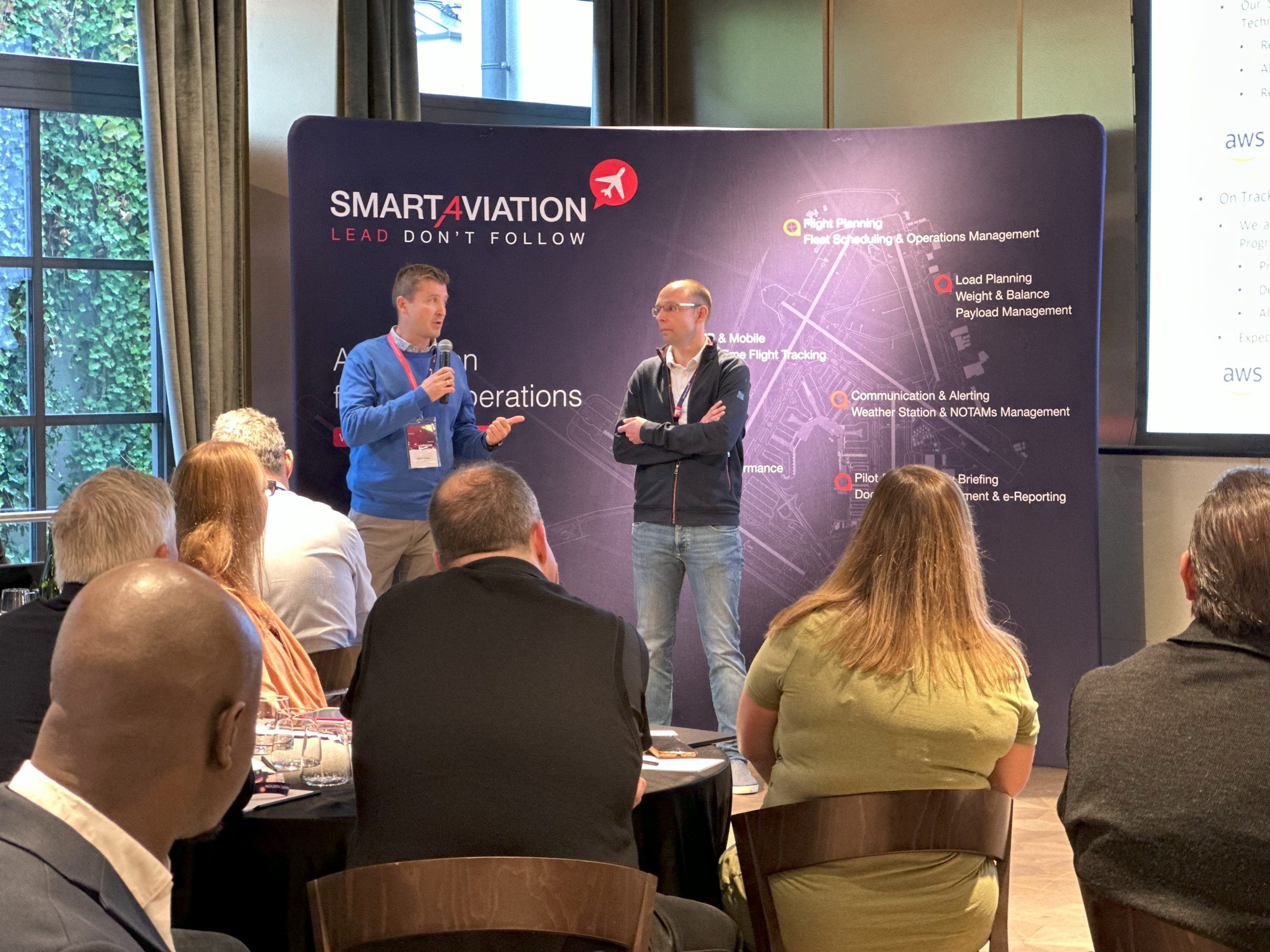
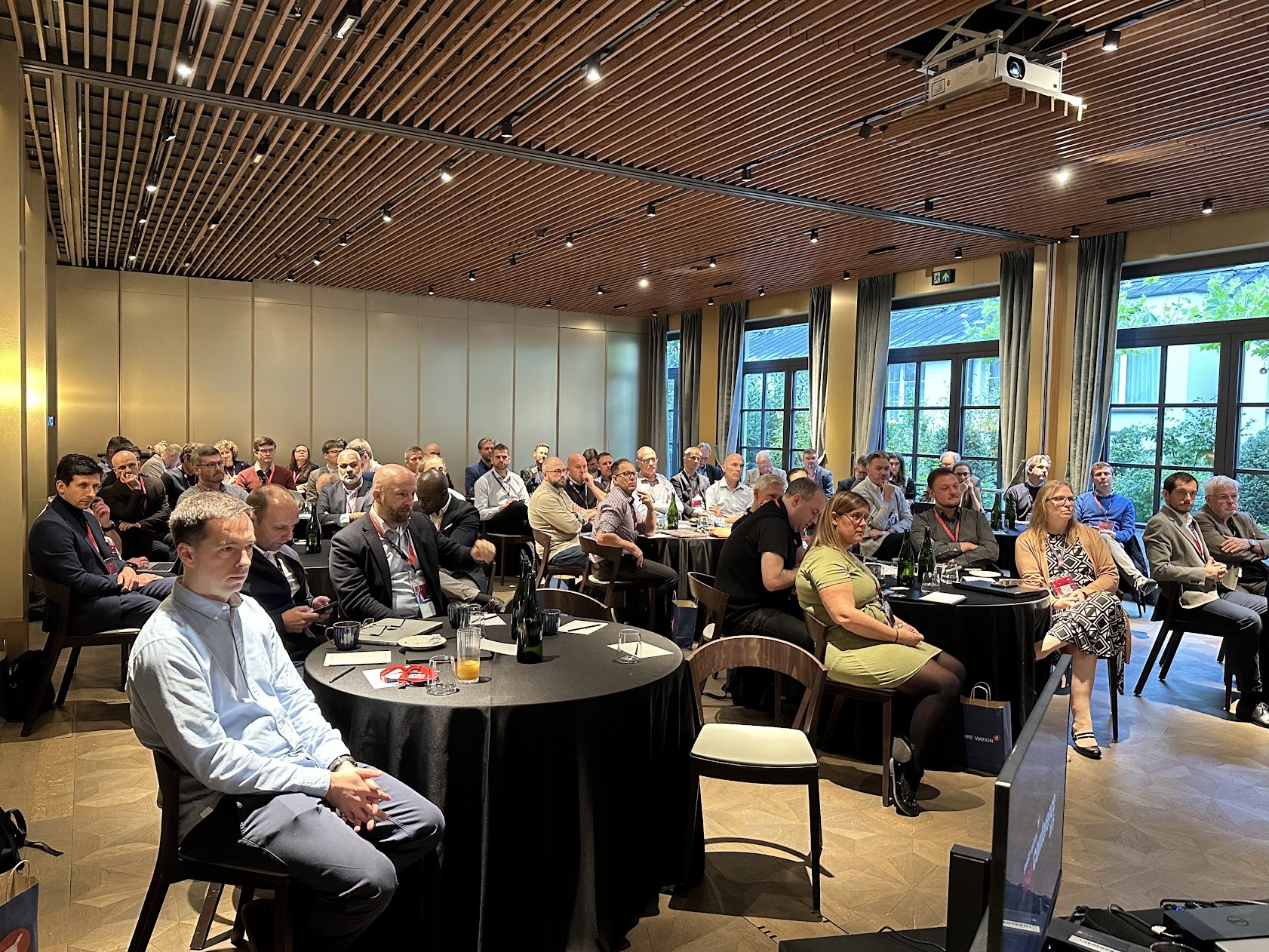
The first full day of the User Conference focused on industry trends, innovation, and product evolution. We began by looking at the current challenges airlines face and shared how our company is addressing them with new technologies and smarter workflows. We were pleased to welcome Aleksandr Vasilevich (Account Executive) from Amazon Web Services, who spoke about our strong partnership and how we rapidly adopt the latest AWS cloud technologies to power scalable, secure, and innovative solutions for our customers.
Smart4Aviation User Conference 2025

The day featured a deep dive into our product suite, with special emphasis on the latest enhancements to Smart OPERATIONS MANAGER (our dynamic real-time airline schedule and fleet management system), including improved planning and visualization capabilities. We also explored the broader evolution of our platform - from mobile applications and progressive web apps to new collaboration tools (like instant chat powered by Rocket.Chat) and user experience improvements.
Smart4Aviation User Conference 2025
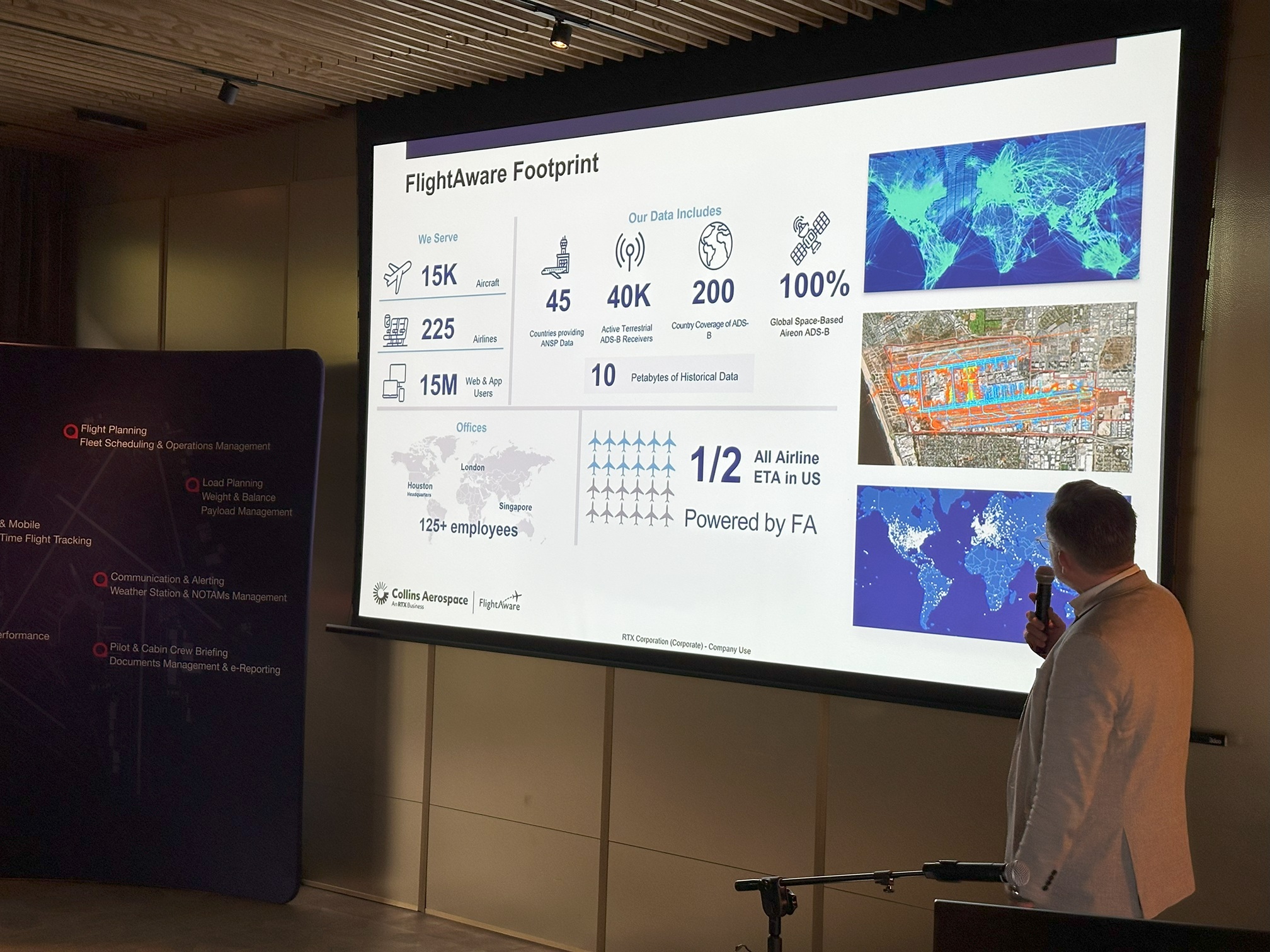
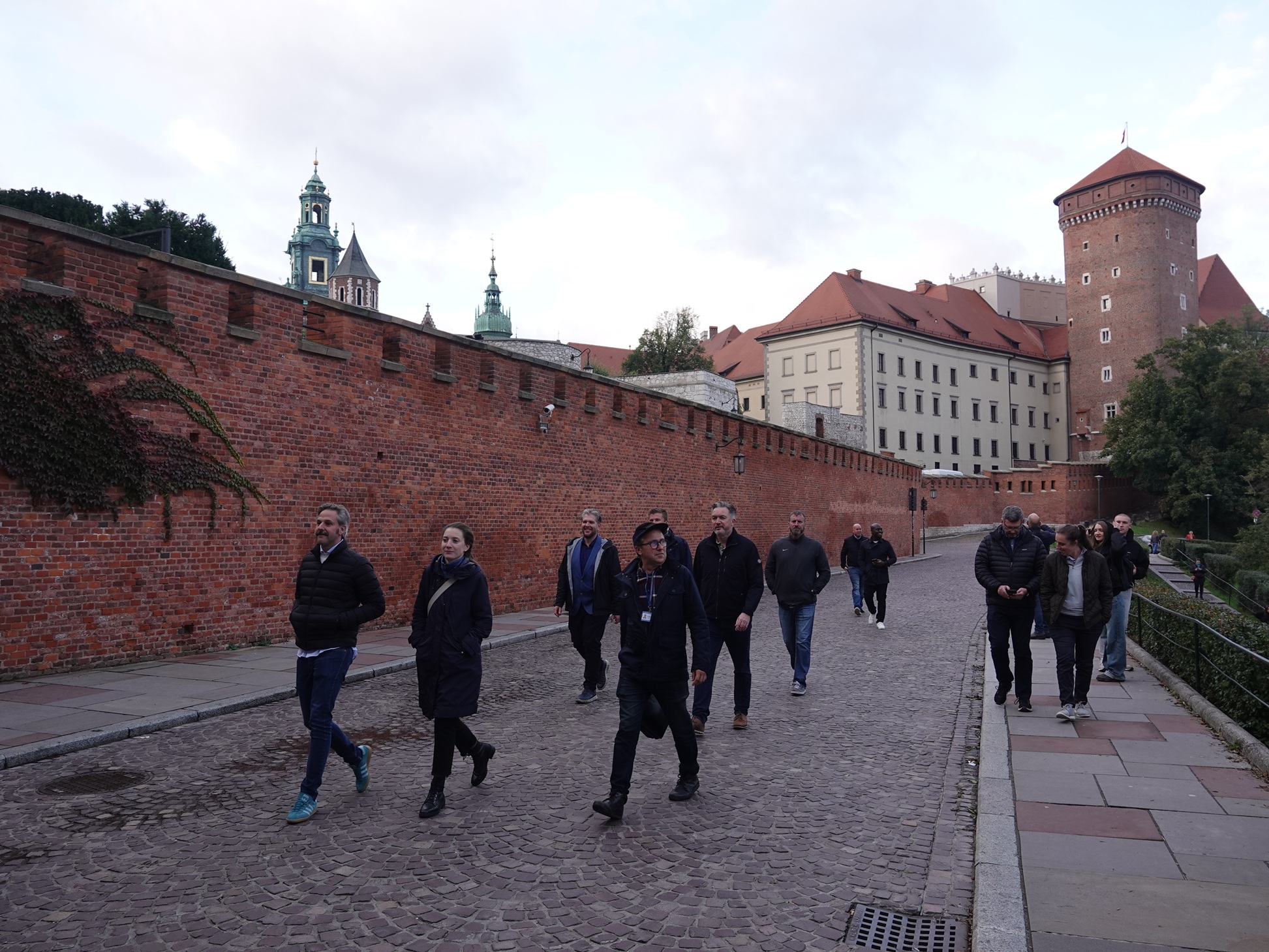
Our partner Toby Tucker (EMEA Sales Director) from FlightAware shared how FA’s data is integrated into our solutions to improve decision-making and situational awareness, and highlighted the strength and future potential of our collaboration. The day concluded with a guided tour of Kraków and a networking dinner at a nice restaurant, where guests enjoyed great food, conversation, and the chance to deepen connections made during the event.
Smart4Aviation User Conference 2025

Thursday – 2nd Conference Day

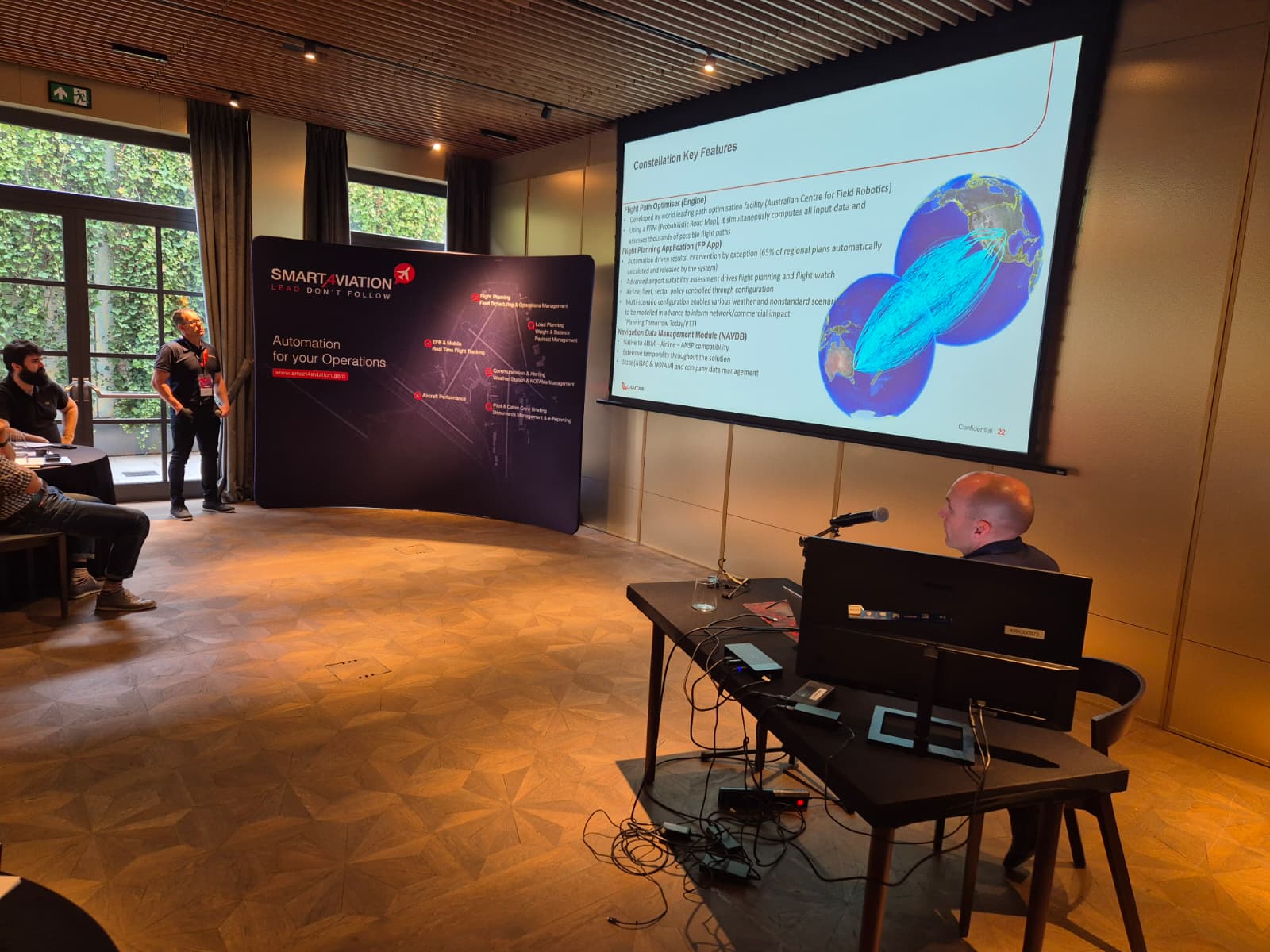
The final day of the conference highlighted cutting-edge developments and forward-looking innovation. We began with an inspiring session from Qantas, who showcased our jointly developed flight planning system and explained how it will help them operate the world’s longest commercial route through their Project Sunrise- a powerful example of technology shaping the future of aviation.
Smart4Aviation User Conference 2025
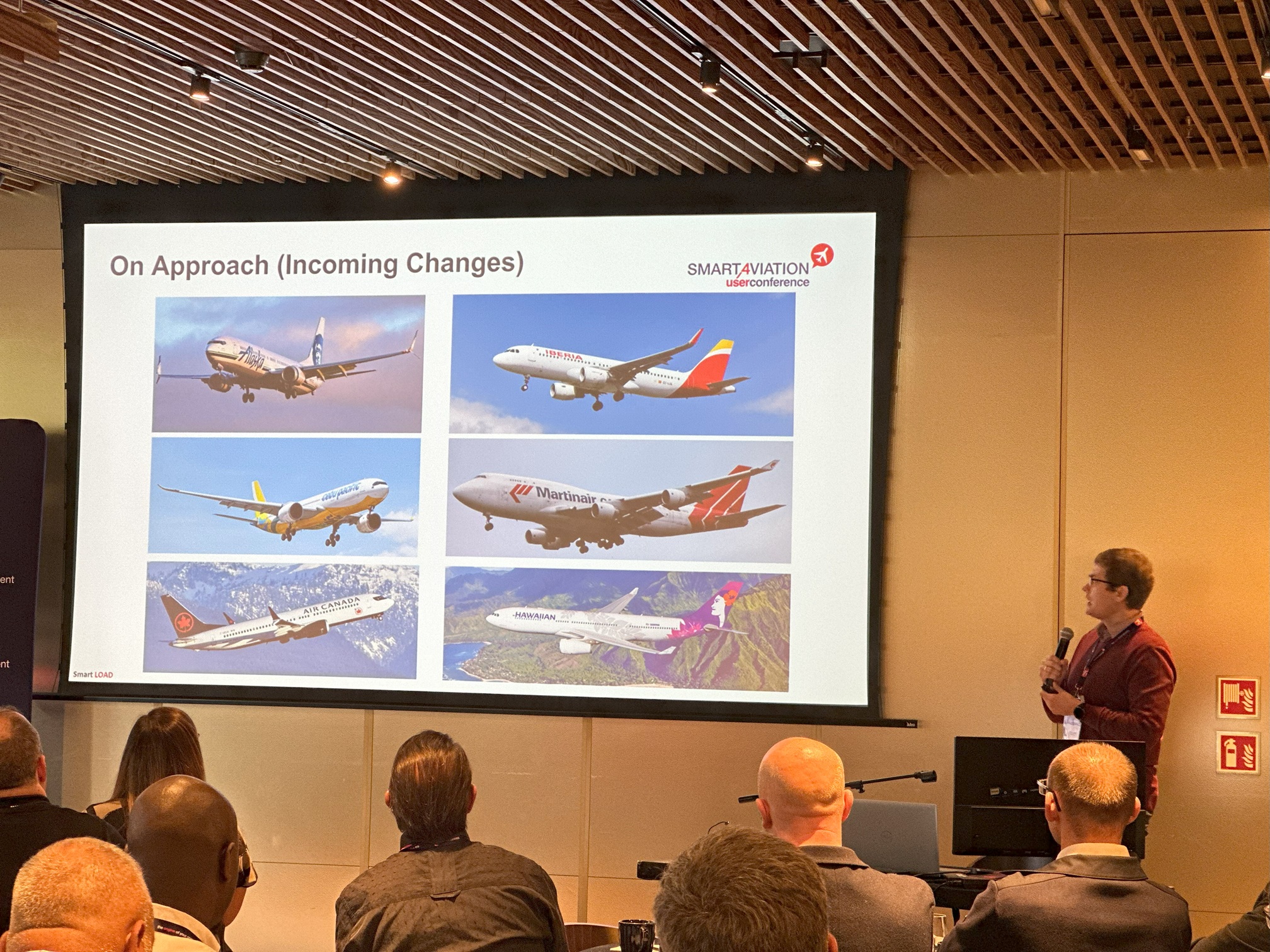
The agenda then shifted to product roadmaps and upcoming enhancements across our suite, including our communication & alerting solution (Smart COMM), situational awareness and flight tracking system (Smart VIEW+), and Weight & Balance and Load Planning system (Smart LOAD).
Smart4Aviation User Conference 2025
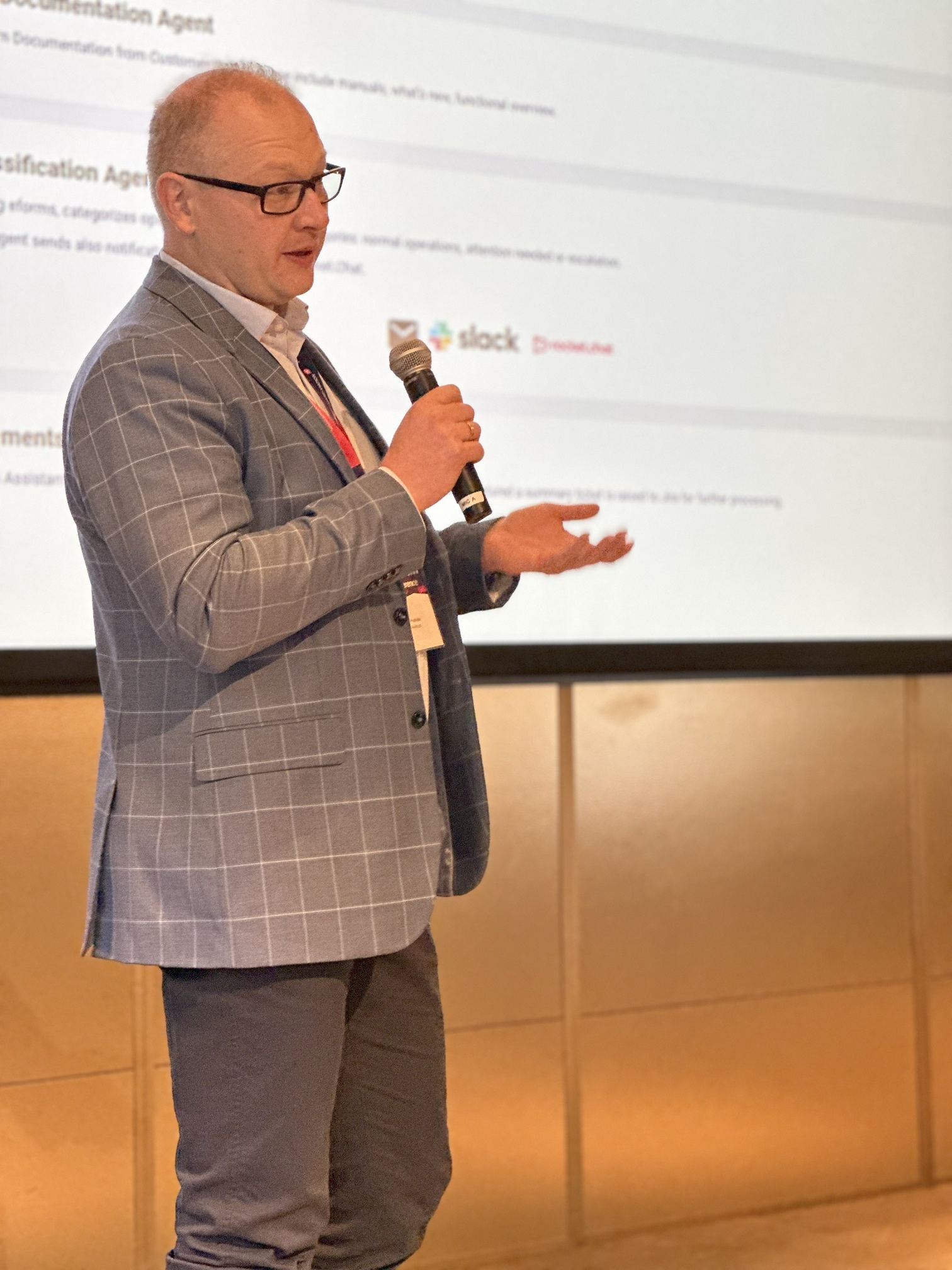
A key highlight of the day was the introduction of our AI-driven initiatives. We demonstrated how artificial intelligence is being embedded into our platform to support more efficient workflows, faster access to operational data, and better decision-making. Attendees saw how AI can help with natural language queries, document search, automated form classification, and streamlined change request processes.
Smart4Aviation User Conference 2025

Looking Ahead

This year’s User Conference was more than just a showcase of technology - it was a conversation with our customers and partners about the future of airline operations. The feedback we received during and after the event was overwhelmingly positive. Attendees praised the opportunity to connect directly with our product teams, learn from other airlines’ experiences, and see how our solutions are evolving to meet real operational needs.

We place great value on individual feedback. Throughout the conference, participants shared their ideas, challenges, and feature requests in open discussions and dedicated sessions. These insights are essential to how we shape our roadmap: they help us refine our products, prioritize improvements, and identify opportunities to innovate where it matters most for airlines.
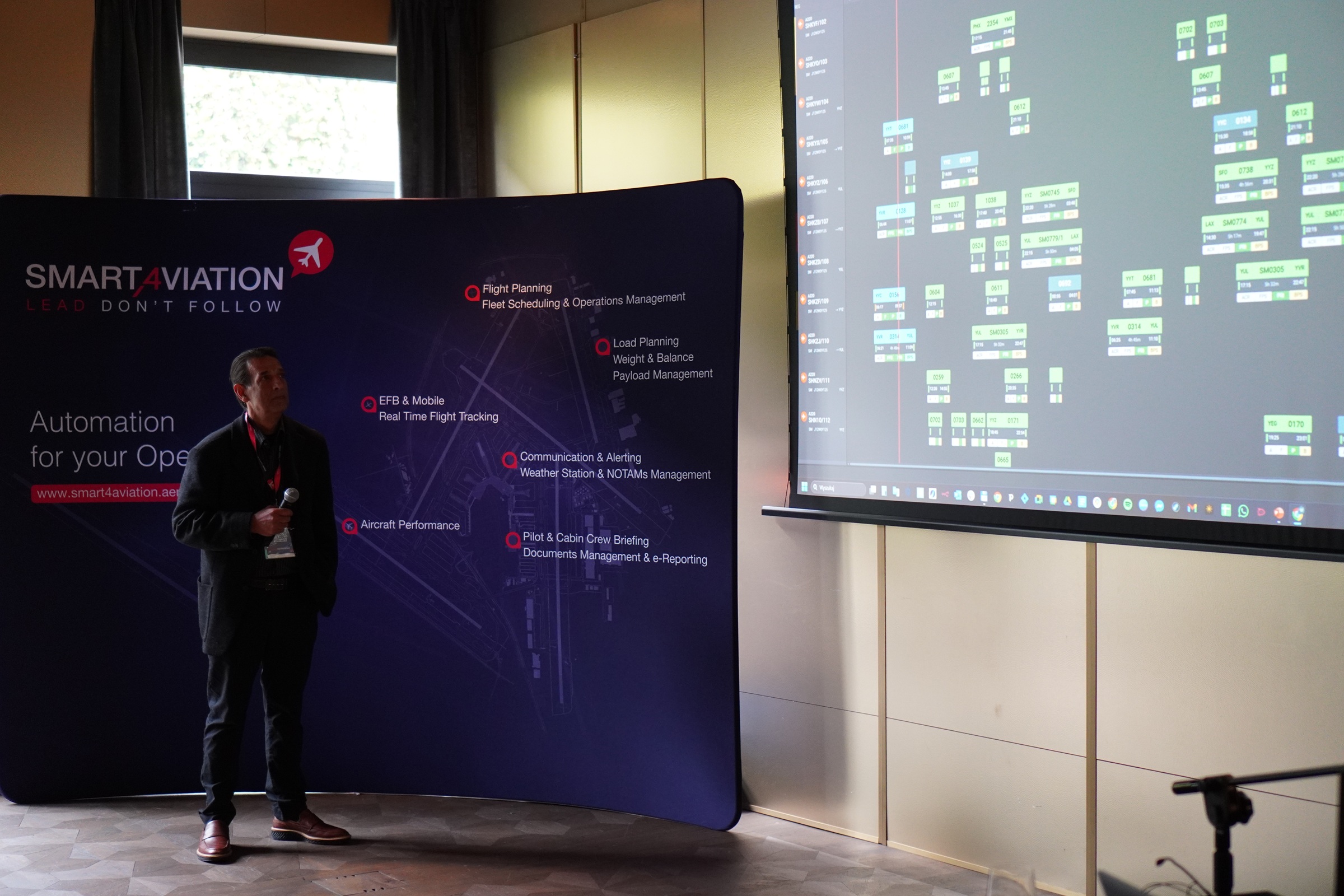
Smart4Aviation User Conference 2025
We’re already using the input gathered in Kraków to plan the next conference format - including a mix of general sessions for everyone and focused workshops tailored to specific operational domains. Our goal is to make each conference an even more valuable experience for every attendee, whether they join to discover new technology, influence product direction, or exchange best practices with peers.
Smart4Aviation User Conference 2025
We would like to thank all our customers, partners, and speakers for their trust and collaboration. Events like this remind us why we do what we do: building technology that truly empowers airlines to operate smarter, safer, and more efficiently.
back to top
We use cookies to ensure that we give you the best experience on our website. Learn more
Acknowledge